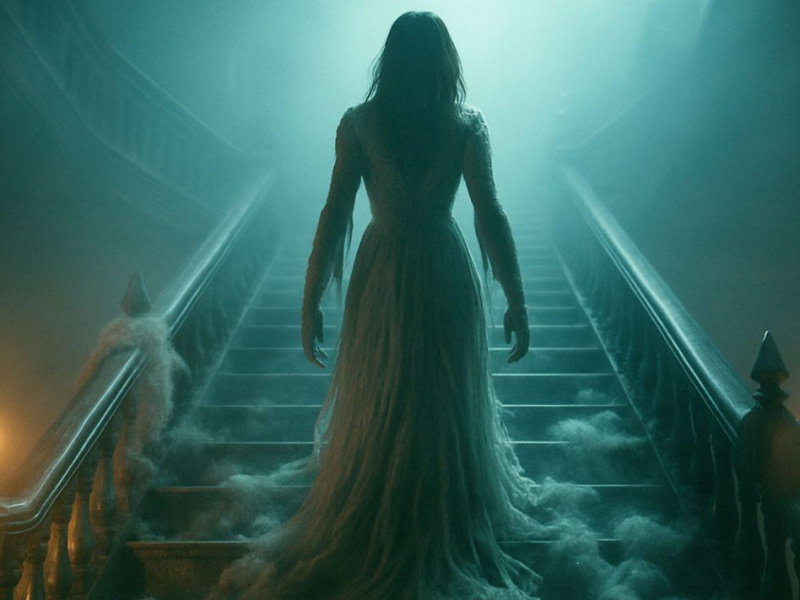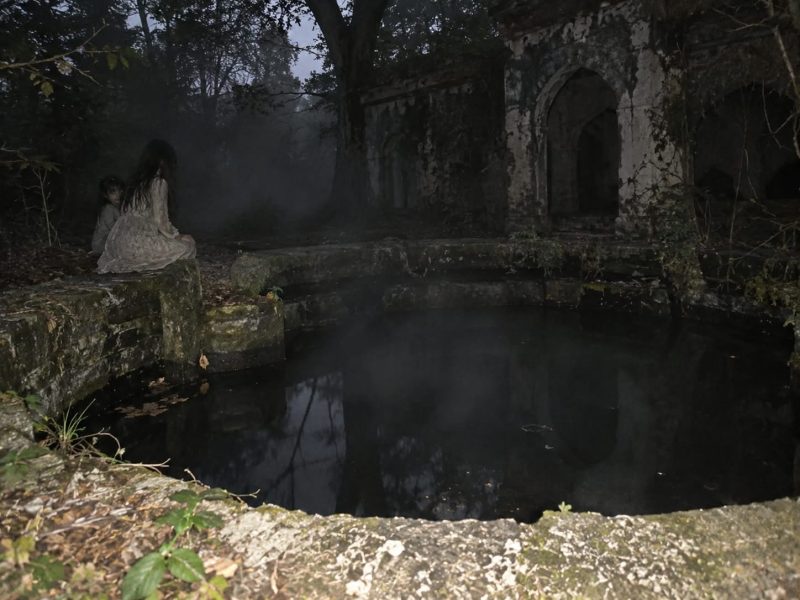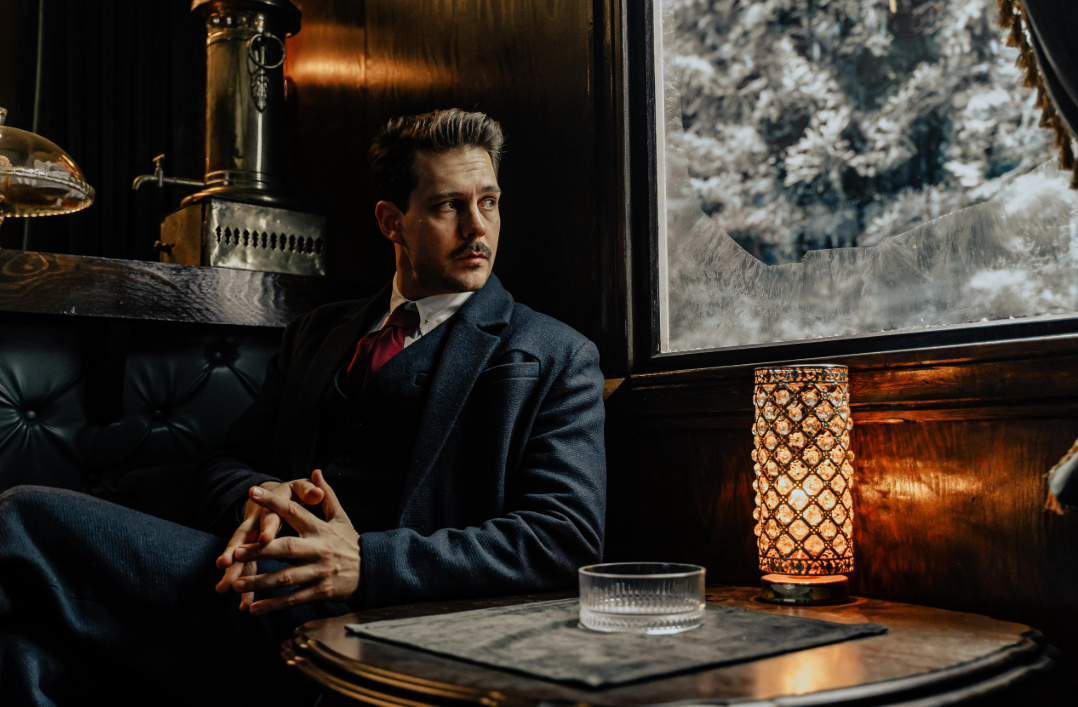
On a freezing November night in 1893, a young railway clerk boarded the last train to Blackmoor. Only one other passenger occupied the carriage—a mysterious gentleman wearing a black top hat. The stranger knew his name, his darkest secret, and exactly when he would die. But the most terrifying discovery came later, when the clerk found the gentleman’s photograph in an old newspaper dated forty years earlier.
An original fictional vintage horror story inspired by the mysterious atmosphere of nineteenth-century railway travel.
Chapter 1: The Last Train to Blackmoor
The rain had been falling for three days when twenty-nine-year-old Edward Whitmore arrived at the railway station.
It was November 17, 1893.
The station clock showed 11:47 p.m.
Edward was exhausted.
He had spent the entire evening working at a solicitor’s office in London, reviewing documents belonging to a wealthy businessman who had recently died under unusual circumstances.
All Edward wanted was to return home.
His wife, Catherine, was waiting for him in the quiet village of Blackmoor.
The platform was almost deserted.
A station porter stood beneath a flickering gas lamp, sweeping rainwater away from the entrance.
“Last train, sir,” the porter called.
Edward nodded and hurried toward the waiting locomotive.
As he stepped into the first-class carriage, he noticed something unusual.
Every compartment was empty.
Except one.
At the far end sat a gentleman wearing an expensive black coat, polished leather shoes, and a tall silk hat.
His face was pale.
His dark eyes followed Edward as he entered.
“Good evening, Mr. Whitmore,” the stranger said.
Edward stopped.
“Do I know you?”
The gentleman smiled.
“Not yet.”
Chapter 2: The Gentleman Who Knew Too Much
Edward sat opposite the stranger.
The carriage smelled faintly of tobacco and old leather.
Outside, the rain struck the windows.
For several minutes, neither man spoke.
Then the stranger removed a silver pocket watch from his coat.
“You’re returning to Blackmoor,” he said.
Edward looked up.
“Yes.”
“Your wife is Catherine. You have a daughter named Rose.”
Edward frowned.
“How do you know my family?”
The stranger ignored the question.
“Your daughter turned six last Tuesday. She wanted a wooden music box, but you bought her a porcelain doll instead.”
Edward felt uncomfortable.
“Have you been following me?”
The stranger slowly closed his watch.
“Following you would suggest I didn’t already know where you were going.”
Edward stood.
“I think I’ll find another compartment.”
The stranger’s expression changed.
“I wouldn’t do that.”
“Why?”
“Because the other compartments aren’t empty.”
Edward glanced toward the dark corridor.
He had seen nobody when he boarded.
“What do you mean?”
The stranger leaned forward.
“They’re waiting for you.”
Chapter 3: The Passenger Without a Ticket
The train began moving.
Its wheels rattled across the tracks as the station disappeared into the rain.
Edward tried to ignore the stranger.
He opened his newspaper.
But the gentleman continued watching him.
“Have you ever wondered,” the stranger asked, “why some people survive accidents while others do not?”
Edward lowered the paper.
“What kind of question is that?”
“A simple one.”
The stranger reached into his coat and produced an old railway ticket.
It was yellowed with age.
Across the front were printed the words:
LONDON TO BLACKMOOR — NOVEMBER 17, 1853.
Edward stared.
“That’s forty years old.”
“Indeed.”
“Why are you carrying it?”
The stranger smiled.
“Because I never reached my destination.”
A cold draft passed through the carriage.
Edward looked toward the window.
For a moment, he thought he saw a woman’s face reflected in the glass.
But when he turned, the seat beside him was empty.
The stranger tapped his pocket watch.
“Midnight is approaching, Edward.”
“Why does that matter?”
“Because that’s when the passengers begin remembering.”
Chapter 4: The Woman in the Corridor
At exactly midnight, the carriage lights flickered.
The train entered a long tunnel.
Edward heard footsteps outside the compartment.
Slow.
Uneven.
Then someone knocked on the glass door.
A young woman stood in the corridor.
She wore an old-fashioned blue dress and a small velvet hat.
Her face was pale.
Her hair appeared wet.
She pressed one hand against the glass.
“Please,” she whispered. “Let me in.”
Edward immediately reached for the handle.
The stranger seized his wrist.
“Don’t.”
“She’s frightened!”
“She’s been frightened for forty years.”
Edward stared at him.
The woman’s expression changed.
Her eyes widened.
Her mouth opened.
But instead of speaking, she released a long, terrible scream.
The carriage lights went out.
When they returned, the woman was gone.
Only a wet handprint remained on the glass.
Chapter 5: The Train That Never Arrived
Edward backed away from the compartment door.
“What is happening?”
The stranger removed his top hat.
For the first time, Edward noticed a long scar above his left eyebrow.
“My name is Charles Harrow,” he said.
“Should that mean something to me?”
“It should.”
Charles reached into his coat and handed Edward a folded newspaper.
The paper was brittle.
Its date was November 19, 1853.
The headline read:
MIDNIGHT EXPRESS DESTROYED IN BLACKMOOR RAILWAY DISASTER.
Edward read the article.
Forty years earlier, a passenger train had derailed while crossing an old bridge during a violent storm.
Dozens of passengers had died.
Among them was a wealthy gentleman named Charles Harrow.
Edward looked at the man sitting opposite him.
The newspaper contained a small portrait.
It was unmistakably the same face.
The same dark eyes.
The same scar.
The same black top hat.
Edward’s hands began trembling.
“You’re dead.”
Charles nodded.
“Yes.”
“Then what are you doing here?”
Charles looked toward the rain-covered window.
“Trying to prevent another disaster.”
Chapter 6: The Secret in Edward’s Briefcase
Edward could barely breathe.
He wanted to scream.
He wanted to escape.
But the train was moving too quickly.
Charles leaned forward.
“You have something in your briefcase that does not belong to you.”
Edward instinctively pulled the leather case closer.
“I don’t know what you’re talking about.”
“Then open it.”
Edward hesitated.
Inside the briefcase were several legal documents, a fountain pen, and a sealed envelope.
The envelope contained evidence of financial fraud committed by Edward’s employer.
For months, Edward had helped falsify railway inspection reports.
He had accepted payments to approve repairs that had never been completed.
One report concerned the old bridge outside Blackmoor.
The bridge was dangerously unstable.
Yet Edward had signed a document declaring it safe.
Charles watched him silently.
“How much did they pay you?”
Edward swallowed.
“Two hundred pounds.”
“And how many lives is that worth?”
Edward said nothing.
Charles pointed toward the window.
“Look outside.”
The rain suddenly stopped.
Beyond the glass, Edward saw a railway bridge suspended above a dark river.
And on the bridge stood dozens of people.
Men.
Women.
Children.
All dressed in clothing from forty years earlier.
They were watching the train.
Chapter 7: The Passengers Who Never Went Home
The compartment door slowly opened.
The woman in the blue dress stepped inside.
Behind her stood an elderly man holding a suitcase.
Then a young soldier.
Then a mother carrying a sleeping infant.
More figures appeared in the corridor.
Their clothing was soaked.
Their faces were pale.
None of them spoke.
Edward pressed himself against the window.
Charles stood.
“These are the passengers who died on this railway in 1853.”
Edward shook his head.
“This isn’t possible.”
“Neither was the accident,” Charles replied. “The bridge had been declared safe despite warnings about its condition.”
Edward stared at the silent figures.
Charles continued.
“History is about to repeat itself.”
The woman in blue stepped closer.
She placed a folded paper on Edward’s lap.
It was a railway inspection report.
At the bottom was Edward’s signature.
But the date was tomorrow.
November 18, 1893.
Edward looked up.
“I haven’t signed this.”
“Not yet,” Charles answered.
Chapter 8: The Warning at 12:14
The silver pocket watch began ticking loudly.
Charles opened it.
The hands showed 12:13 a.m.
“You have one minute,” he said.
“One minute until what?”
“Until the train reaches Blackmoor Bridge.”
Edward rushed toward the window.
Through the darkness, he saw the outline of the bridge approaching.
The river beneath it was swollen from days of rain.
A violent gust shook the carriage.
Edward grabbed the seat.
“How do I stop it?”
Charles pointed toward the emergency brake.
“Pull it.”
Edward reached for the handle.
But suddenly, the carriage began changing.
The red velvet seats became torn and faded.
The polished wooden walls cracked.
The windows darkened with soot.
The passengers’ faces grew indistinct.
The train was transforming into the wrecked midnight express of 1853.
Edward pulled the emergency brake.
Nothing happened.
He pulled again.
The handle snapped in his hand.
Charles looked at the watch.
12:14 a.m.
“There’s one more way,” he whispered.
“What?”
“You must tell the truth.”
Chapter 9: The Confession
Edward dropped to his knees.
“I signed the reports,” he cried.
The passengers remained motionless.
“I knew the bridge was unsafe!”
The train continued racing forward.
Edward’s voice broke.
“I took the money because I was afraid of losing my position. I told myself someone else would discover the damage before anything happened.”
Charles stepped closer.
“And now?”
Edward looked at the mother holding her child.
“I was wrong.”
The woman in blue slowly raised her head.
Edward continued.
“I’ll confess everything. I’ll give the documents to the authorities. I’ll tell them who paid me.”
The silver watch stopped ticking.
Charles smiled sadly.
“Then perhaps you still have time.”
The train suddenly lurched.
Edward fell against the seat.
The lights flashed.
A deafening metallic screech filled the carriage.
Then everything went black.
Chapter 10: The Man Who Wasn’t There
Edward woke on the floor of the carriage.
Sunlight streamed through the windows.
The train stood motionless at Blackmoor Station.
A railway guard knelt beside him.
“Sir? Can you hear me?”
Edward sat upright.
“What happened?”
“You fainted, apparently. We’ve been trying to wake you.”
Edward looked around.
The carriage was empty.
“Where is the gentleman?”
“What gentleman?”
“The man in the black top hat. He was sitting right there!”
The guard frowned.
“Sir, you were the only passenger in this carriage.”
Edward stared at the empty seat.
Then he noticed something lying on the cushion.
A silver pocket watch.
Its hands were frozen at 12:14.
He picked it up.
Inside the cover was an engraved name.
CHARLES HARROW — 1853.
Edward felt his stomach tighten.
The stranger had been real.
Or something very close to real.
Chapter 11: The Newspaper From Forty Years Ago
Edward hurried to the local newspaper office.
He asked the editor to search the archives for reports about the Blackmoor railway disaster.
After nearly an hour, the editor returned with a collection of old newspapers.
Edward found the article immediately.
The photograph of Charles Harrow stared back at him.
But one detail made Edward’s blood run cold.
The article stated that Charles had not been a passenger.
He had been the railway engineer who warned officials that the bridge was unsafe.
His warnings had been ignored.
On the night of the disaster, Charles boarded the train to persuade the conductor to stop before reaching the bridge.
He failed.
He died alongside the passengers he had tried to save.
Edward sat silently.
The stranger had spent forty years trying to finish what he had started.
And somehow, he had chosen Edward.
Chapter 12: The Truth Finally Comes Out
That afternoon, Edward visited the railway authorities.
He confessed to falsifying inspection reports.
He surrendered the documents and identified the businessmen responsible for bribing him.
An emergency inspection of Blackmoor Bridge was ordered.
Engineers discovered severe structural damage.
The bridge was closed immediately.
Two days later, part of its central support collapsed into the river.
Had a passenger train been crossing at the time, the consequences could have been catastrophic.
Edward faced prosecution for his actions.
He lost his position and much of his reputation.
But he accepted responsibility.
He knew that telling the truth had prevented a tragedy.
And every evening, he thanked the mysterious gentleman who had given him another chance.
Chapter 13: The Stranger Returns
Twenty years passed.
Edward grew old.
His daughter Rose became a schoolteacher.
His wife Catherine passed away peacefully.
Edward never boarded another midnight train.
He kept Charles Harrow’s pocket watch locked inside a wooden drawer.
One winter evening in 1913, Edward sat alone beside the fireplace.
Outside, snow fell softly.
The clock on the mantel struck midnight.
Then someone knocked on the front door.
Three slow knocks.
Edward opened it.
A gentleman stood beneath the porch lamp.
He wore a black coat, polished shoes, and a tall silk hat.
His face had not aged.
“Good evening, Edward,” Charles said.
Edward stared at him.
“Have you come for me?”
Charles smiled.
“Not tonight.”
“Then why are you here?”
The stranger removed his hat.
“There’s another train.”
Edward felt a chill.
“Another accident?”
“Another man who needs to make a choice.”
Charles glanced toward the road.
An old-fashioned black carriage waited in the snow.
Its windows glowed with warm yellow light.
Edward could see several shadowy figures seated inside.
“Why tell me?” he asked.
Charles reached into his coat and handed him a railway ticket.
“Because this time, you must help me.”
Chapter 14: The Last Journey
Edward looked down at the ticket.
It bore tomorrow’s date.
DECEMBER 18, 1913.
The destination was printed in faded black ink.
BLACKMOOR — ONE WAY.
Edward raised his eyes.
“What happens if I refuse?”
Charles looked toward the waiting carriage.
“Then someone else will have to learn the lesson you learned twenty years ago.”
Edward thought of his daughter.
He thought of the families whose lives had been spared.
And he remembered the silent passengers who had stood in the corridor of the midnight train.
Finally, he reached for his coat.
“Will I come home?”
Charles did not answer.
He simply opened the carriage door.
Inside sat the woman in the blue dress.
The elderly man with the suitcase.
The young soldier.
And the mother holding her sleeping child.
All of them smiled at Edward.
For the first time, they looked peaceful.
Edward climbed inside.
Charles closed the door.
The horses began moving.
But their hooves made no sound against the snowy road.
As the carriage disappeared into the darkness, the streetlamps flickered.
And somewhere in the distance, a train whistle echoed through the night.
The Ending: The Passenger Who Never Arrived
The following morning, Rose visited her father’s house.
The front door was unlocked.
The fireplace had burned out.
Her father’s coat was missing.
On the kitchen table lay a handwritten letter.
My dearest Rose,
There are mistakes a man cannot undo.
But sometimes life gives him a chance to prevent someone else from making the same mistake.
If I do not return, remember that I loved you.
And if you ever find yourself alone on a midnight train, be kind to the stranger sitting opposite you.
He may know more about your journey than you do.
Your loving father,
Edward.
Rose searched for her father for months.
No one had seen him leave.
No railway station had sold him a ticket.
No carriage driver remembered collecting him.
Eventually, she accepted that he was gone.
But years later, an extraordinary story began circulating among railway workers.
Passengers traveling alone after midnight sometimes reported meeting two gentlemen in an otherwise empty carriage.
One wore a black top hat.
The other carried a silver pocket watch.
They would ask the passenger a simple question:
“Is there something you know you should tell the truth about?”
Those who answered honestly arrived safely at their destination.
Those who refused sometimes reported waking at unfamiliar stations, hours later than expected.
And according to the oldest railway legend, if you ever board the last train to Blackmoor and see a gentleman in a black top hat sitting alone, there is one thing you must never do.
Never ask him where he is going.
Because he will smile, open his pocket watch, and answer:
“The same place you’re going.”
The End.